


Mission Overview
================
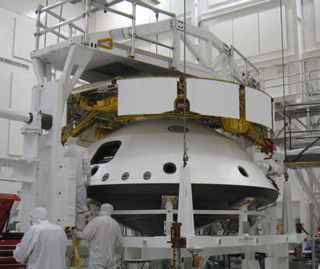
Development of the Mars Science Laboratory project began in 2003. On November 26 2011, the Mars Science Laboratory mission launched a spacecraft on a trajectory to Mars, and on August 6, 2012 (UTC), it landed a mobile science vehicle named Curiosity at a landing site in Gale Crater. During the trip to Mars, instrument health checks were performed and the Radiation Assessment Detector (RAD) instrument collected science data. For the primary mission on the surface of Mars (ending September 28, 2014), the rover explored the landing site and gathered imaging, spectroscopy, composition data, and othermeasurements for selected Martian soils, rocks, and the atmosphere.
These data will allow the science team to quantitatively assess the habitability and environmental history. The prime mission's science objectives were to assess the biological potential of the landing site, characterize the geology of the landing region, investigate planetary processes that influence habitability, and characterize the broad spectrum of surface radiation. The first extended mission retains all of the prime mission's objectives and will also strive to: identify and quantitatively assess the subset of habitable environments that are also capable of preserving organic compounds, and explore and characterize major environmental transitions recorded in the geology ofthe foothills of Mt. Sharp and adjacent plains.
more ...
Available Data
External Reference
|
|
 |
Privacy / Copyright Freedom of Information Act |
 |
Web Master: PDS-PPI Operator NASA Official: Becky McCauley-Rench |